


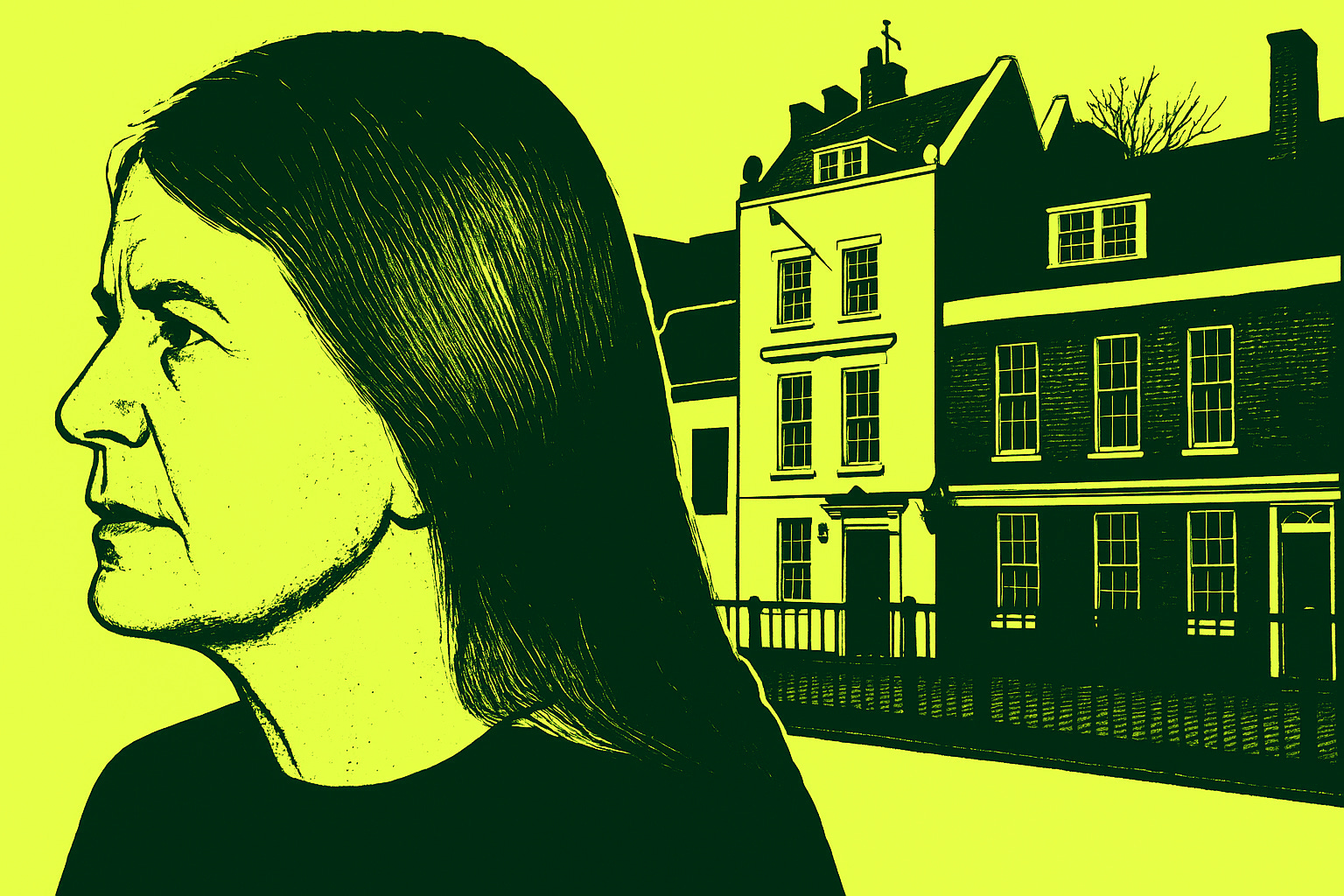
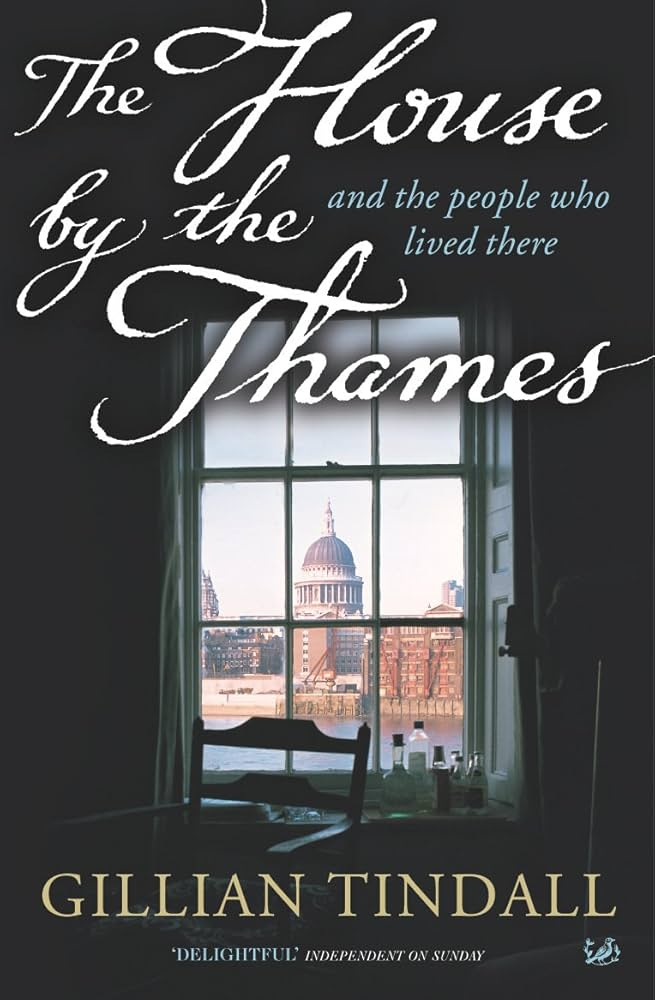
Gillian Tindall spent a lifetime chronicling the overlooked corners of London. A journalist and novelist, she became one of Britain’s finest practitioners of “miniaturist history”—the close study of a building, a street, or a few square metres of ground as a window into a much broader human story. Her work traced how ordinary lives accumulate meaning in particular places and how those places, in turn, shape the life of the city. She died on October 1 at 87.
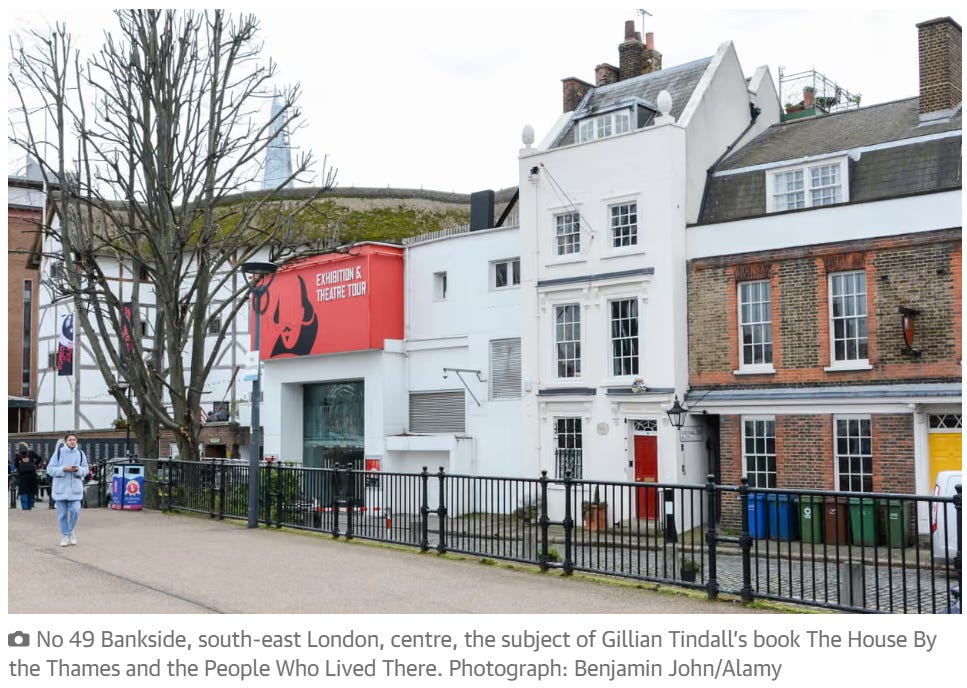
Her most celebrated book, The House by the Thames, reconstructs the lives of three centuries of residents at 49 Bankside, a modest terrace beside the Globe Theatre and today in the shadow of the Tate Modern. Built in 1710, the block endured merchants, scrupulous bargemen, Flemish sex workers, a crippled cook, and, later, the decline that swept much of London’s working riverfront.

Tindall’s account reads almost like a time-lapse film: shifting fortunes, changing tastes, and the steady pressure of urban reinvention. Each inhabitant—whether prosperous or hard up—left faint traces. She pieced them together with the patience of an archaeologist, connecting seemingly unrelated threads of history and showcasing how real cities are built.
The Financial Times once called Tindall’s books “masterpieces of micro-history.” The label fits. She approached London not as a planner or preservationist, but as someone alert to the everyday grain of urban life—what the Economist obituary described as “an interest that started when she first went to London as a student in 1963.” She spent evenings poring over census records and rare books, long after many of her contemporaries embraced more fashionable academic theories.
This form of scholarship reminded my of the kind of legwork my firm once undertook supporting Durham’s historic plaque programme, combing Sanborn maps and city directories to reconstruct who lived where and why it mattered. Such work does not simply document buildings; it reveals how collective memory is formed and how identity is anchored through the physical world. Tindall’s passing reminded me that such research is a dying art, either because too few care to underwrite the work, or we are simply suffering a perpetually declining number of places that are worth researching.

LIKE JANE JACOBS, A SCEPTICISM OF PLANNERS
‘Short-termism was a mistake that is only just being realised.’
Tindall harboured, in her own dry way, a scepticism of planners. In this, she shared something with Jane Jacobs, whose famous opening line—“This book is an attack on current city planning”—could easily have served as an epigraph for Tindall’s work.
The planners Tindall knew in the 1960s were not subtle. As she saw it, they were high-modernist idealists who levelled functioning neighbourhoods in search of a cleaner future. These planners were top-down. Londoners, like her, were bottom-up.
She chronicled the forced relocation of her fellow citydwellers as their neighbourhoods were demolished by mid-century planners with their “blinkered enthusiasm”, similar to America’s urban renewals. She knew such programs would not end well.
In response, she spent years attending meetings of the London and Middlesex Archaeological Society and co-founded the Camden History Society in part to scrutinise these interventions. ‘Traditionally, buildings were expected to last indefinitely – almost any of them could be kept going if properly maintained,’ she said. ‘Short-termism was a mistake that is only just being realised.’
LEARNINGS FOR TODAY
Today, planning and preservation are often seen as natural allies. Tindall’s career is a useful reminder that the relationship has always been uneasy. Planning, particularly in its authoritarian era, has its own damaging legacy; while preservation can calcify into a defensive reflex against any form of change. Both movements contain strands of idealism and strands of overreach. Both, in my experience, lack accountability.
Tindall’s miniaturist histories offer a gentler and more pragmatic lesson. Cities are not primarily shaped by grand Burnhamian “make no small plans” designs; they grow through countless small decisions, habits, and adaptations. The places that matter most—homes, corners, odd buildings, back lanes—are small almost by definition. They are where memory resides. Large projects may reshape skylines and create collective memory, but small places hold a city’s emotional infrastructure.
The task, then, is not simply to defend old places or to promote new ones, but to encourage the steady creation and renewal of meaningful small environments. This requires a preservation movement willing to distinguish between what is genuinely significant and what is merely old, and planning systems that allow new places to emerge rather than flattening the fabric that gives a city character.
For me, Tindall belonged to a tradition of journalism that is increasingly scarce: patient, curious, unhurried by ideology. She did not romanticise the past, nor did she shy away from the political forces reshaping London. But she approached them with humility, tracing origins to reveal consequences, rather than rationalizing a pre-determined narrative.
As local journalism contracts and planning debates grow more polarized, Tindall’s sensibility feels rarer. Her work endures not because it argued for a particular policy agenda, but because it illuminated why places matter. It explained to us laymen why more great places should be built, and not be treated as a finite resource.
She will be missed.
