


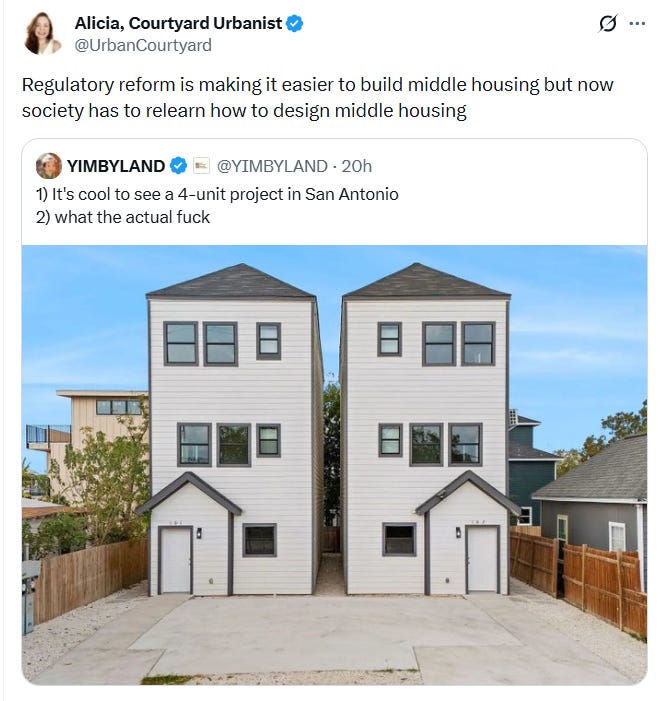
Earlier this week, my pal Alica Pedersen, aka The Courtyard Urbanist, tweeted that “Regulatory reform is making it easier to build middle housing, but now society has to relearn how to design middle housing.” And she is accurate. We have to re-learn these skills.
The end goal here - ubiquity of great development - is universal. But also fleeting. It seems ridiculous to even suggest that we, in America, will ever see a day when (most) everything is charming, meaningful, and beautiful, much like the great cities, such as Chicago, were when they were constructed in the Gilded Age.
What is not understood is that this process is linear and sequential.
The solutions are painfully simple, though not easy. Success requires cultural, political, legal, pedological, and practice reform. The good news is that all of this is happening today in some way, shape, or form. What is not understood is that this process is linear and sequential. In other words, we will not have political courage before we have a cultural tidal wave demanding better. We will not have legal reform before politicians truly buy in.
Cultural discontent and institutional pressure must precede political will, legal freedom, skilled execution, and, finally, the actual development of beautiful cities.
And in this context, we can now see why so few schools or trades are even bothering to learn (re-learn, really) the practice of making great places.
If it’s not legal to do so, why bother?
Thus, it follows that until the reforms are in place to allow for great urbanism, great architecture, and great development, we will not see universities and trade groups buy in. In other words, it’s on the people to elect politicians who care about places, and it’s on the politicians to direct their legal and planning staff to work with the practitioners to codify (and unearth) the frameworks required to usher in this new Gilded Age.
We are not there. Not yet.
A NEW HIERARCHY
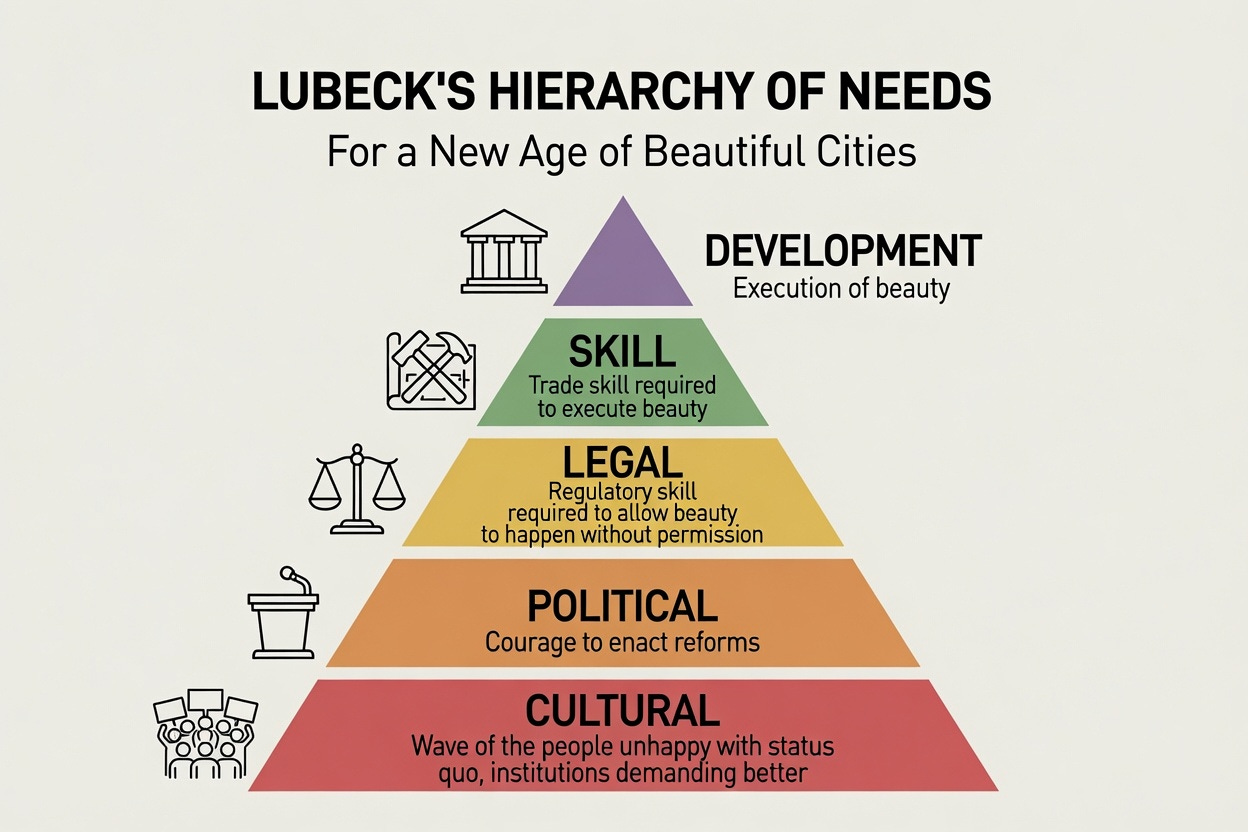
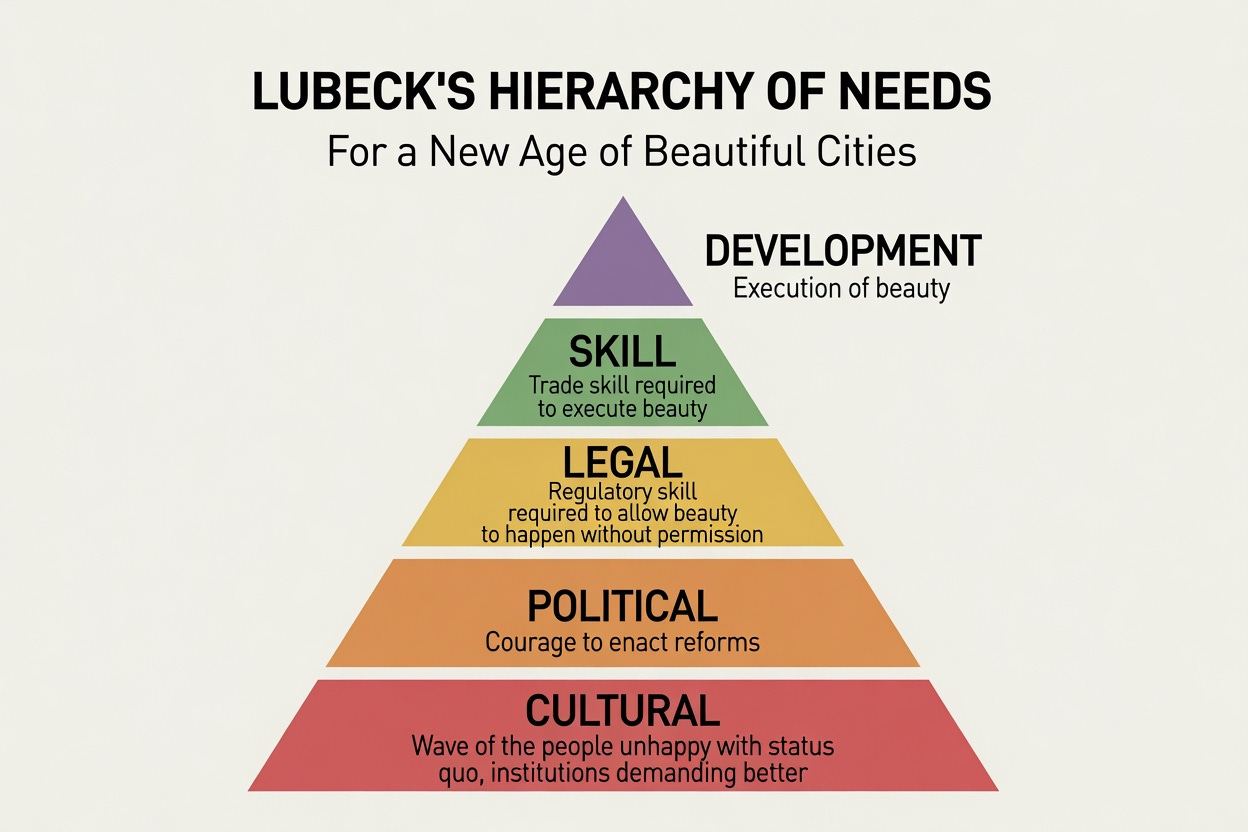
I drafted this proposed adaptation of Maslow’s pyramid tailored to the systemic requirements for reviving beauty, craftsmanship, and human-scale cities.
Just as Maslow’s hierarchy shows how basic survival must be met before higher flourishing, Lubeck’s Hierarchy of Needs argues that cultural discontent and institutional pressure must precede the political will, legal freedom, skilled execution, and finally the actual development of beautiful places.
Here is a detailed analysis of the proposed structure:
