



For years, whenever I passed through the Pacific Northwest, I carved out an hour with Alan Durning, the founder and long-time executive director of Sightline Institute—the gold standard for localized urbanism and housing advocacy. Few American think-tanks have had such a durable impact, and even fewer have done it without losing their soul.
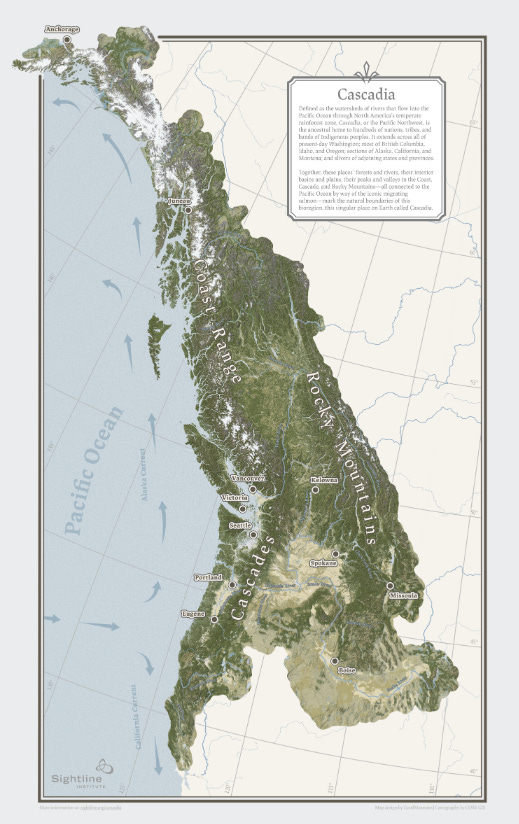
Sightline is now more than 30 years old. It began as a climate and energy shop, but over time added deep competence in democracy reform, and housing and cities. What has always struck me is not its breadth but its discipline: Sightline is emphatically, almost stubbornly, local. It serves Cascadia—Northern California to Vancouver—and nowhere else. That is why it works. Localism matters.
WHICH GOT ME THINKING
Years ago, when I was sketching out what would become Southern Urbanism, I asked Alan whether he’d ever consider endorsing a Sightline Southeast. To be clear, I wasn't asking him to start something new, only to be the willing and acknowledged inspiration for it. The answer was polite but definitive: expansion would dilute the very thing that made Sightline effective. A brand can travel; a mission often cannot. He was right. And he still is.
The answer was “no”. Why? Because in grassroots advocacy, proximity matters.
Strong Towns, admirable as it is, illustrates the constraint. A national organisation can inspire. It can provoke. But it cannot embed, at least not like Sightline. Sightline succeeds precisely because it is embedded—marinated in the culture, politics, and geography unique to the Pacific Northwest. It belongs to its region in a way a nationwide touring lecture circuit never can.
The South has 150 million people—7.5 times the 20 million population Sightline serves
Still, the South is starved for institutions that take cities seriously. But there is a huge problem. Our region has 150 million people—7.5 times the 20 million population Sightline serves—and nothing remotely comparable in scale, funding, or reputation. The South’s cultural map stretches from Washington, D.C. to El Paso—it is unruly, diverse, and harder to narrate. But the need is clearly there.

So, purely as a whiteboard exercise—and with full respect for Sightline, which has no interest in such expansion—here is what I believe a Sightline-style think-tank for the South could look like. If I ran it, these would be my idiosyncratic priorities:
1. Marry New Urbanism and YIMBYism

I am one of the few people who think that New Urbanism and YIMBYism are two sides of the same coin. And these seemingly disparate movements are actually the perfect yin and yang, because each thrives where the other struggles.
YIMBY groups are unmatched at legalising and producing more housing, but they tend to undervalue design and placemaking. New Urbanists are unmatched at quality and craft, but rarely achieve expansionary housing policy victories at scale. Partnership and alignment are obvious to me, and long overdue.
The young YIMBY organisers of today are brilliant and relentless, but they have not been trained to design and build places—only to legalise them. This is fixable. I would want to teach the YIMBYs urban design and architecture, not for the purpose of ornament but as the operating system for human flourishing. We would teach them how to develop these places, not through 3rd parties, but by themselves. Groups like the Incremental Development Alliance (where I am faculty) offer those trainings. These schools should be accelerated and offered at scale.
Ultimately, former New Urbanist Executive Director Rick Cole is right when he adamantly argued that quantity and quality in housing are not mutually exclusive. “Why not both?” he said.
Quantity and quality in housing are not mutually exclusive. “Why not both?”
A Sightline Southeast would exist to create abundant AND loved places.
2. Fix the Schools
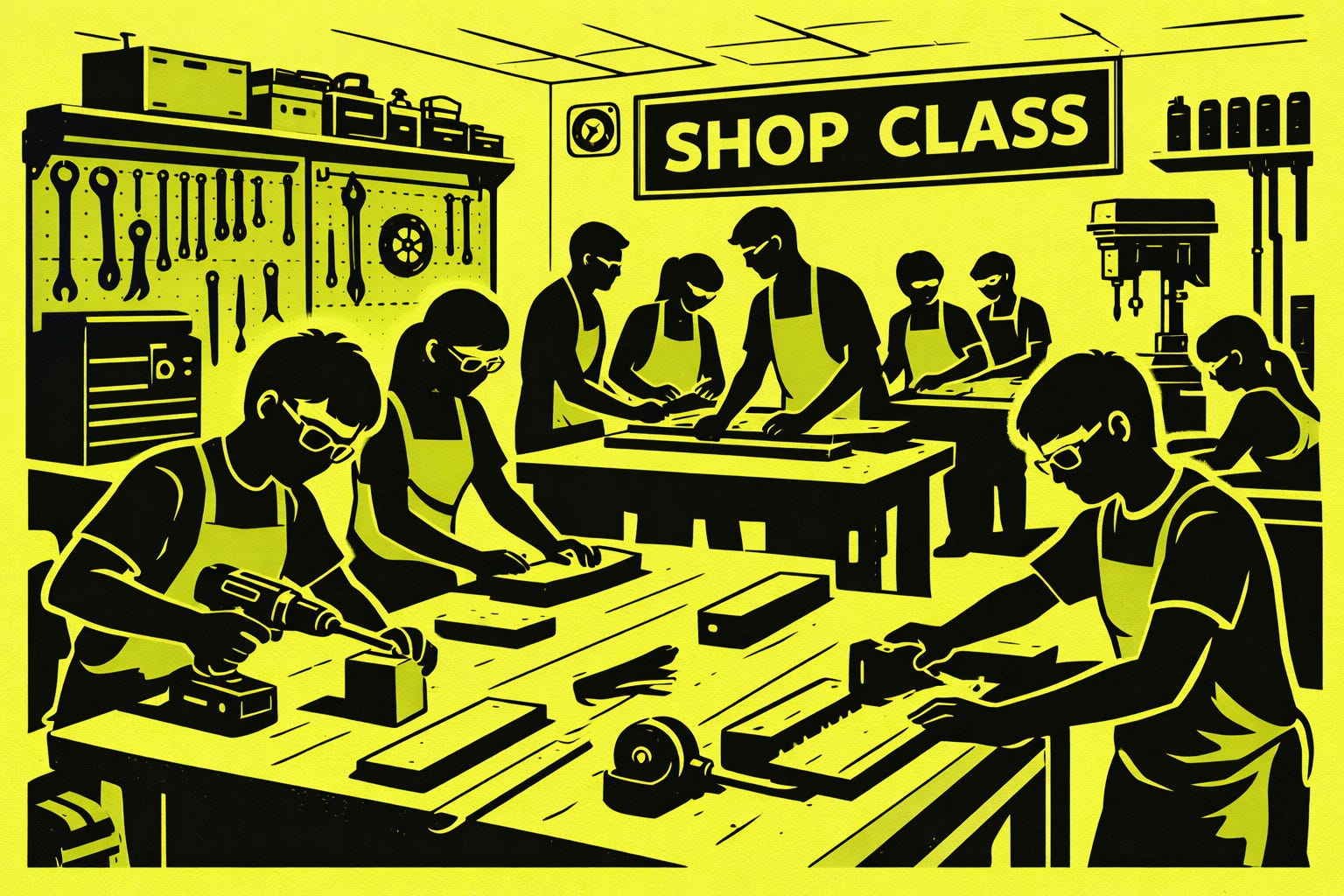
Generation Z is brimming with people who want to work on cities. Almost none of the schools know how to teach them.
I personally have a 17-year-old and a 19-year-old fitting this description. They both want to build cities, and there are no obvious places to send them for training. All of the schools are deficient in some way.
A Sightline Southeast would make urbanist education reform a central project.
Architecture programmes teach heroic modernism, yet few graduates can design a basic bungalow. Planning schools often avoid actual planning altogether, preferring sociology and Marxist theory to the simple craft of drawing, well, a plan. Trade programmes teach carpentry without teaching the purpose of city-building, as though assembled 2x4s exist independently of communities and history.
What we need is Renaissance men (and women) who can do all of these things.
A Sightline Southeast would make urbanist education reform a central project. Architecture programmes should once again teach traditional and vernacular building. If not fully transforming, flagship public charter architecture schools should at least have some traditional teachers on the faculty, versed in local practice and architectural history. Planning schools should be deconstructed and rebuilt to focus exclusively on designing and managing the public realm—parks, streets, utilities. No more meddling with private development.
Lastly, every Southern state should underwrite a statewide elite boarding-school Citybuilding Academy—modeled on NC School of Science and Math—to train 400 teenagers per year in architecture, carpentry, urban development, leadership, and civic craft. The demand already exists, and the model exists, but the institutions do not. I would want to build them.
It’s a huge lift, but completely possible. And the obvious next phase of advocacy is training the next generation to succeed in the practice where today’s practitioners have failed.
3. Relocalise the Practice

Finally, the great crisis in American urbanism is not simply zoning. It is the corporatisation and financialisation of the built environment. Affordable housing, in particular, has become a playground for political hacks, complex capital stacks, tax-credit factories, and institutional developers. The result is predictable: fewer builders, less competition, diminishing local capacity. And declining quality. For multiple generations now, much of our affordable housing has had a 30-year shelf life. That’s simply unacceptable, and the impermanence of these developments is a sign that something is terribly rotten.
We need the inverse—a movement that restores local builders, local developers, and localized place-based capital. Done well, our affordable housing should last, well, forever. Since zoning put a thumb on the scale in favour of financialised interests, policy reformers can remove it. And must. Model codes, local exemptions, gentle-density overlays, small-project finance reform—there is enormous white space here. And shockingly little research and advocacy. Some of this is already underway in Durham. Much more could follow.
A Sightline Southeast would specialise in this neglected field: creating tools that shift city-making back to the hands of people who live in those cities.
A Small Team, A Wide Mandate
A proper think tank operation would start small. Its job would not be to reinvent the wheel but to amplify what already works. The South already contains dozens of scattered organizations committed to building better places. What it lacks is a hub, a connective tissue, a sense of shared regional ambition. A vision.
The South deserves an institution that is rooted, rigorous, and relentless. One that treats urbanism not as an aesthetic preference for some but as a moral and economic necessity for all. One that understands that good places are not accidents—they are the products of intelligence, craft, determination, and persistent political will.
A Sightline Southeast would partner with and amplify the many existing local fragments fighting for better cities in the south. Every housing action tank shares some commonality with legislative reform, community organizing, and research. But it’s the unique specialties that set organizations apart. A Sightline Southeast would be unique in its commitment to the afromentied priorities—Marrying New Urbanism and YIMBYism, fixing the schools, and relocalizing practice.
But it would also stand out because it would be emphatically southern. Stubbornly so. And in that local (hyperlocal, really) commitment, it would, like the original Sightline, be effective far beyond its mission-restricted borders.
It’d be a helluva job, and I’d have a helluva lot of fun doing it.


I'd love to see the effort with a focus on driving more doing as a measure of success. To me, it seems like so many of these efforts (local urbanist/Strong Towns chapters) result in a lot of talking together (which is nice), but not a lot of doing together (which is not so nice). How could you help more people build beautiful spaces and places together vs talking about it?
I especially love the idea of a boarding school academy for citybuilders. Perhaps the College of the Building Arts can add a high school program to pilot.