
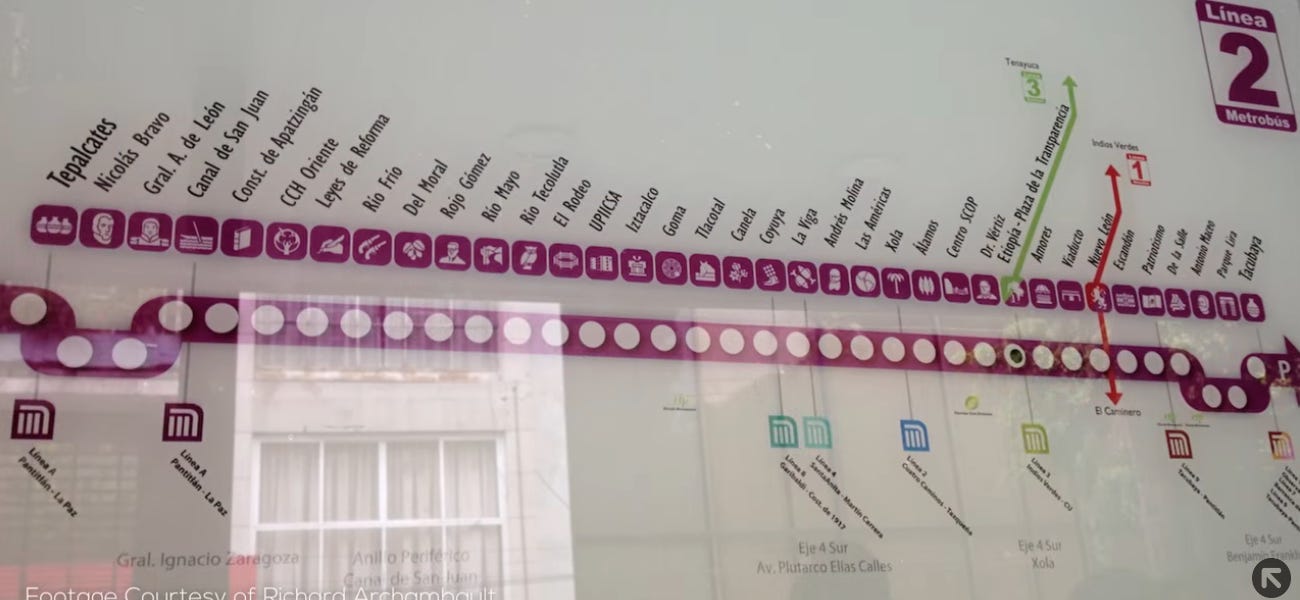
MEXICO CITY, MX | One of the most remarkable things about the Mexico City Metro is not its scale, though it is enormous. Nor is it the architecture, which is beautiful, nor the crowds, which are abundant, or even the trains themselves. It is the symbols.
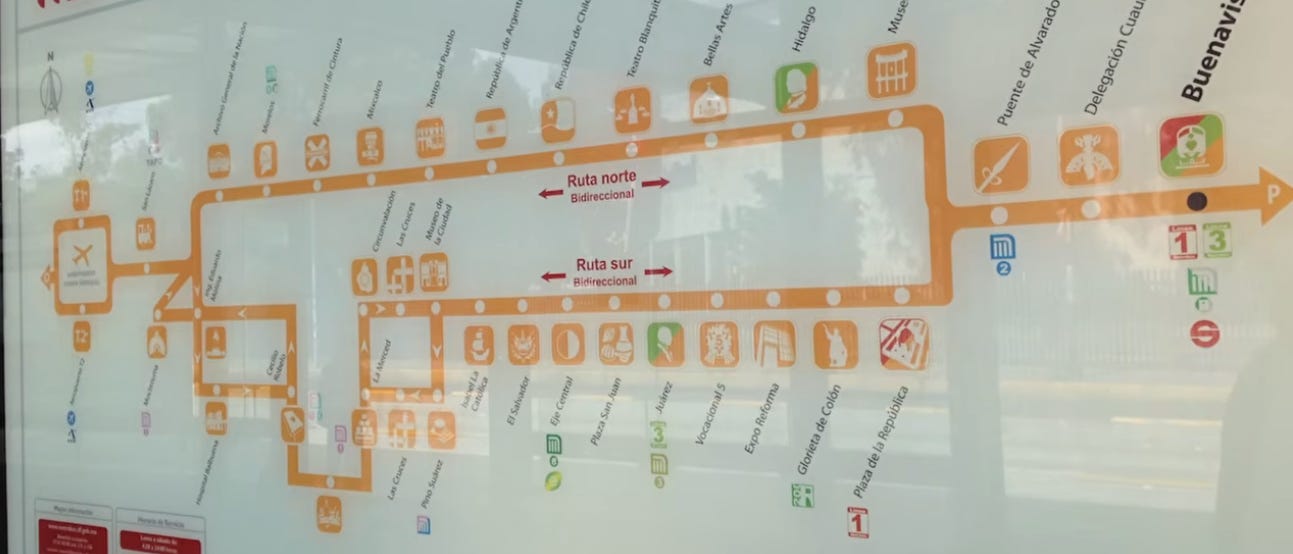
Every station in the Metro system has its own icon. Not just a name, but a visual identity: animals, monuments, historical references, abstract graphics, and local symbols spread across more than 200 stations. The system feels less like anonymous infrastructure and more like a sprawling public gallery stitched into the daily life of one of the world’s largest cities.
The effect is deeply humanizing. The full explanation of the symbology can be seen here:
With art in all its forms present on the system, the Metro becomes more than transportation. It becomes a cultural framework. Transit blogger Reese Martin argued that "(Art) can make the city's history part of an open and public civic space, and it's also a great concept seen in cities such as Athens. Various art exhibits and even small concerts sometimes take place on the Metro.”
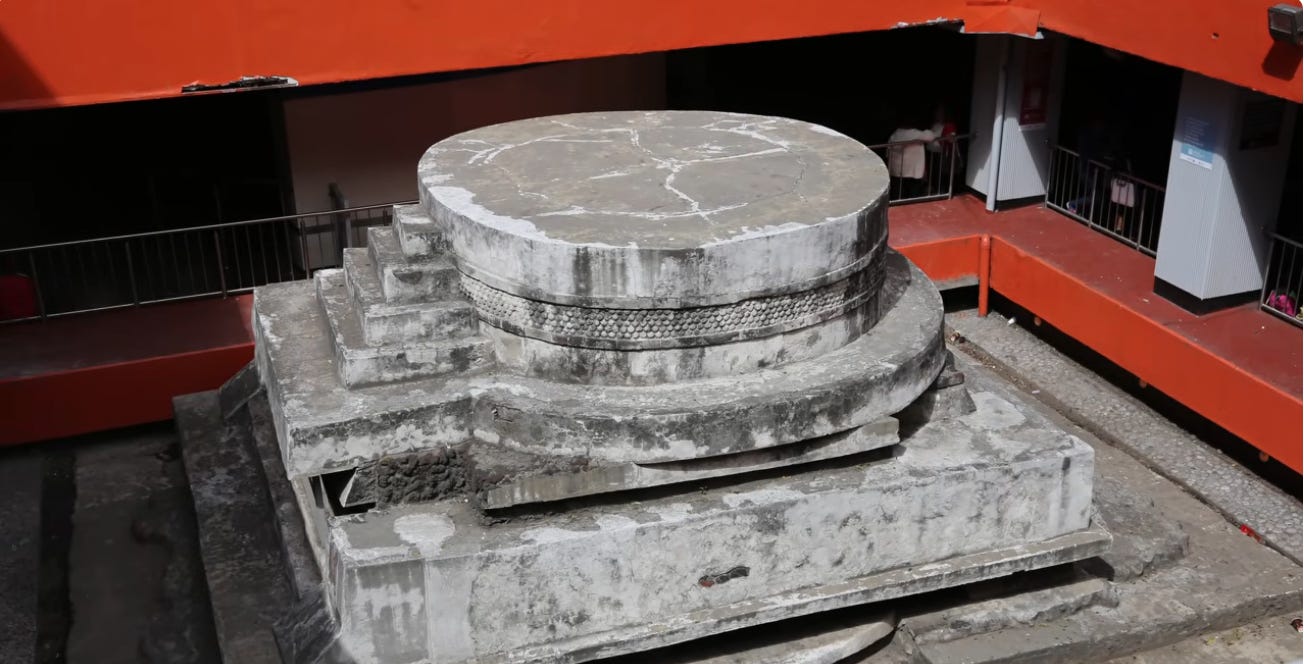
What is particularly fascinating is that the symbols were not originally conceived primarily as art. They were functional. When the Metro system was envisioned in the 1960s, literacy rates in Mexico hovered around roughly 62 to 65 percent. Many riders could not reliably read station names, so symbols provided a universal navigational language.
Today, literacy in Mexico is above 95 percent and likely even higher within the metropolitan population the Metro serves. Yet the symbols remain. What began as a practical solution evolved into one of the strongest expressions of civic identity in the city.
That evolution matters. Modern infrastructure, especially mass transit, can easily become dehumanizing. All large systems tend toward standardization, efficiency, and abstraction. They become optimized for movement rather than meaning. It is difficult for billion-dollar bureaucracies to think small, let alone personal. Yet that is precisely what successful cities must do if they want people to care about the systems they build and, more importantly, the places those systems serve. When people do not care, they tend to hurt themselves, their systems, or others. Meaning matters.
Mexico City understands this intuitively. So does Portland, where public art appears everywhere and has become inseparable from the city’s identity. It applies to new town developments as well. Architect Ross Chapin, with whom I do some work, often recommends naming the cottages in his pocket neighborhoods for art and symbology, rather than the standard placeless numbers. “When a house has a name, how can it be a commodity?” he argues. This emphasis on the qualitative, rather than on data, feels all the more humanizing as the world becomes increasingly obsessed with and driven by the 1s and 0s of automation. Even smaller cities like Richmond have recognized the power of distributed public art through major mural initiatives that rapidly transformed ordinary walls into civic landmarks.
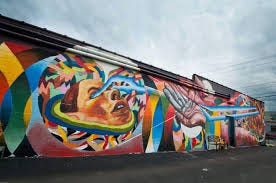
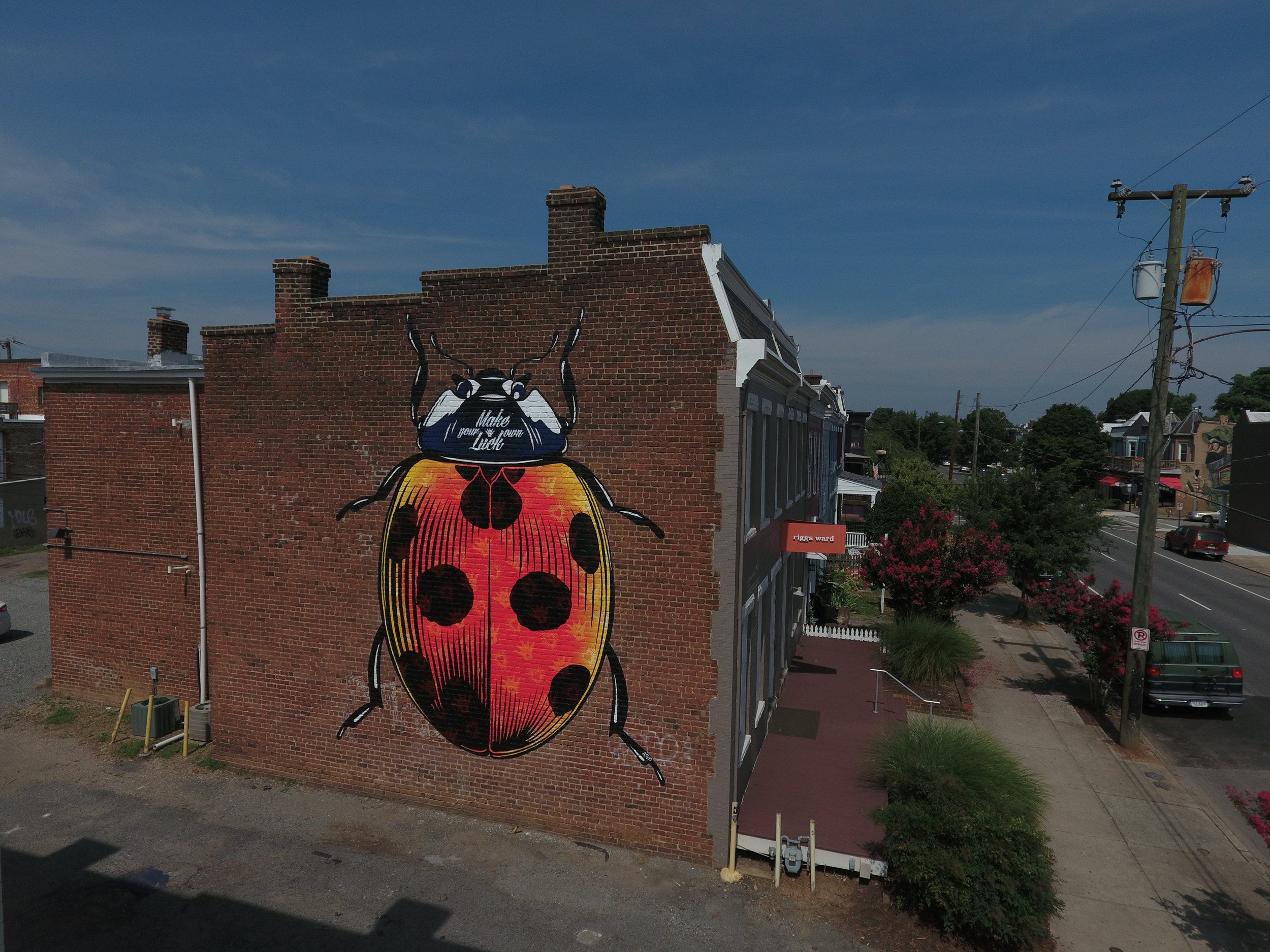
The lesson is not simply that cities should “fund art.” It is that cities should create frameworks that allow culture to visibly flourish in public space.
Too often, public art programs become centralized, bureaucratic, and unnecessarily scarce. Like housing development, projects become burdened by consultants, political gatekeeping, inflated costs, or endless processes. The predictable result is fewer installations, less experimentation, and lower civic impact.
Cities should think differently. Instead of commissioning a handful of monumental projects, they should pursue abundance. Abundance, as always, comes from the bottom up, through distributed talent, and through culture, rather than dictate.
In practical terms, that means identifying hundreds (maybe thousands) of possible canvases throughout a city: electrical boxes, retaining walls, alleyways, utility structures, crosswalks, vacant facades, underpasses, temporary construction fencing, transit stops, and overlooked intersections. In a city like Durham, organizations like the Durham Art Guild could help catalog and curate these opportunities.
Then cities could issue open calls for ideas, encourage private sponsorships, and dramatically lower barriers for participation. The goal should not be perfection, but volume, experimentation, and localism.
Some critics will argue that a grassroots distributed approach risks producing lower-quality work. Perhaps occasionally it does. But culture often emerges through quantity. Particularly in art, talent is discovered through repetition, exposure, and opportunity. A flourishing local arts ecosystem is rarely engineered from above through a tiny number of elite commissions (high-culture commissions more often go to outsiders). More often, it emerges from hundreds of smaller acts of creation distributed throughout civic life. With enough volume, the art becomes a tool for wayfinding, as it did in Mexico City.
This is also the more equitable model. Scarcity tends to concentrate opportunities among the well-connected. Abundance widens participation. Ultimately, the most successful public art is not isolated or monumental. When it is distributed widely, it is embedded. That’s when it is encountered unexpectedly during ordinary life. And that, I think, is the goal. I want to experience my city’s art casually, and without intention. Rather than making plans to visit a museum or gallery, I want to stumble upon one while walking with loved ones.
Cities spend enormous sums underwriting roads, pipes, parking decks, utilities, and stadiums. They should also think of themselves as underwriting the enhancement of a pre-existing culture. A city’s public realm should always function as an open canvas for its citizens. That requires intentionality from its leaders, first and foremost to invite talent, to welcome talent, and to (as always) get the hell out of the way.
It is difficult to imagine a better way to build pride of place than allowing people to visibly shape the environments they share. Ultimately, abundant art should be small and distributed. I am hard-pressed to come up with a better way for a city to evoke pride of place than underwriting public art, in public spaces, through its many citizens.