


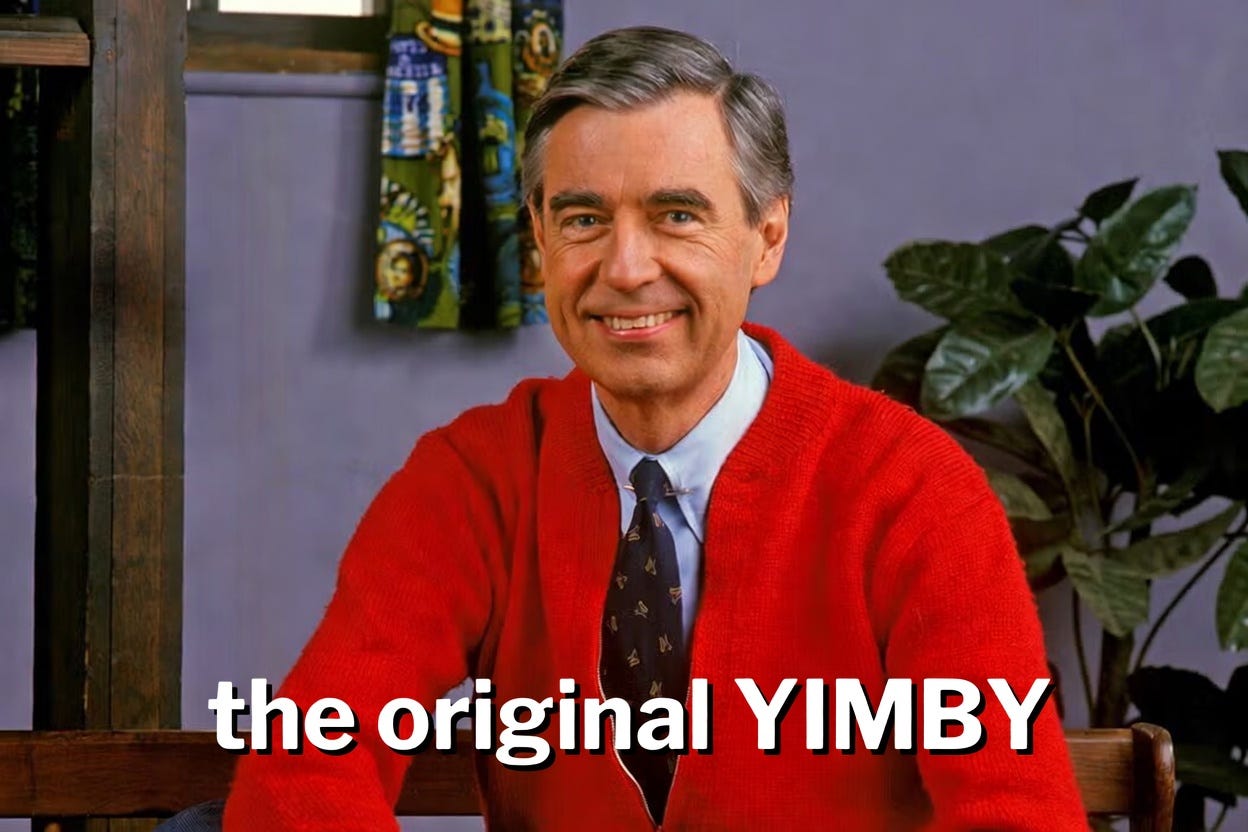
On a mundane set in Pittsburgh, a man in a cardigan rehearsed a revolution so gentle most people missed it.
Fred Rogers, who would have turned 98 last Friday, never spoke of zoning codes or land-use reform. Yet, through Mister Rogers’ Neighborhood, he offered a vision of society that stands in opposition to the exclusionary instincts that define so much of modern housing politics.
The program’s premise was deceptively simple: a neighborhood where everyone is welcome. In today’s terms, this is the moral foundation of the “Yes In My Backyard” movement—a belief that access to place should not be restricted by fear of change or people who are different.
Where contemporary debates are couched in the language of supply constraints and regulatory reform, Rogers made the argument culturally. He treated inclusion not as a policy lever, but as a social norm. The result was a generation that deeply understood that when new people arrive, communities flourish. This core lesson is now playing out in today’s debates between scarcity thinkers and abundance thinkers.
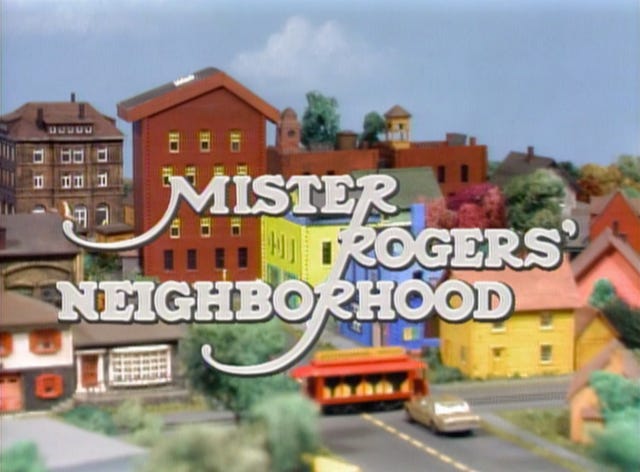
Rogers’ ethos was embedded in the physical world he constructed. His neighborhood was unmistakably Pittsburgh, with rolling hills, beautiful small homes, mixed uses, and pride. In the spirit of Jane Jacobs, doors opened directly onto streets; encounters were frequent and unplanned.
Long before debates over “missing middle” housing or walkability indices, Rogers presented a place where proximity was not a problem to be solved, but the very point of living together. “Euclidean” suburban use separations had no place on this show. Mr. Rogers’ neighborhood resembled, in miniature, the kind of environment urbanists now spend careers attempting to relegalize.
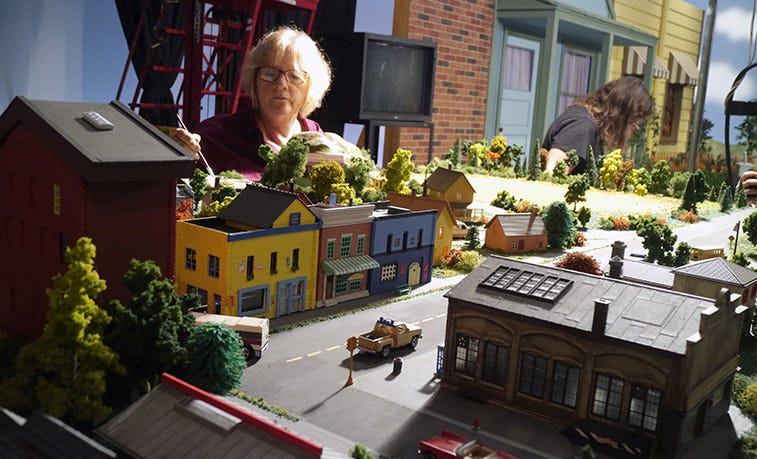
Just as notable was his resistance to grandiosity. At a time when American development increasingly tilted toward large-scale interventions, whether suburban expansion or urban renewal, Rogers modeled a different approach. Change, in his world, was incremental, unfolding through small acts: a conversation, a cup of tea, or a moment of recognition. This sensibility mirrors a growing critique within planning circles that the most resilient urban environments are perpetually changing and iterative, coming into being through the steady accumulation of modest, human-scale decisions. In this sense, Rogers was not merely depicting a neighborhood; he was illustrating the traditional process of building one.
Inclusion is what creates a place’s value
Underlying it all was a consistent prioritisation of dignity over status. There was no sense that some were more deserving of space than others. This stands in contrast to contemporary land-use politics, where the preservation of property values often operates as a proxy for exclusion. The radicalism of Rogers’ approach was to invert this logic: inclusion is what creates a place’s value.
What he offered was a moral argument. Fear, he suggested, narrows communities. Openness enlarges them. Scarcity, whether of attention or of housing, is as much a cultural construct as a material one. By repeatedly demonstrating that there was always space for another person or another perspective, he challenged the instinct to gatekeep our communities.
The modern YIMBY movement, for all its economic rigor, rests on a similar premise. Housing shortages are not merely technical failures; they are the product of collective choices about who belongs and who does not. Reforming zoning codes may increase supply, but sustaining that reform requires a deeper shift in values. It requires, in effect, a cultural permission to restructure society for growth.
In that respect, the cardigan was doing more work than it appeared. Rogers did not need to argue for density bonuses or by-right development. He was, instead, making the case that a good neighborhood is one that can absorb change without losing its humanity. That it can welcome newcomers without perceiving them as threats. That it can grow, organically, while remaining recognisably itself.
For a movement often caricatured as technocratic or developer-driven, this is a useful reminder. The case for saying “yes” is not only about units and yields. It is about the kind of society those units make possible. Rogers understood that intuitively. He built, within the confines of a television studio, a place where belonging was abundant and fear was gently disarmed.
We could all benefit from living more in his image.

".. a good neighborhood is one that can absorb change without losing its humanity." - well said!!
If people are more fixated on "neighborhood character" being the
built character (i.e. building setbacks, building heights, building materials/styles) than
human character (i.e. diversity of demographics via age, race, income, etc.), then we'll likely continue to lose diversity of the latter.
Excellent look at the similarities, as I used to watch Mr Rogers as a kiddo in the mid-1970s. Too bad our continued neighborhood development patterns have devolved to worse than even "Mr Robinson's Neighborhood", Eddie Murphy's 1980s skit on SNL.
*except for those who can afford living in Charleston SC, Seaside FL, downtown Santa Fe, .....