

LOS ANGELES, CA | The fastest way to understand why America cannot build enough housing is not to read a white paper or convene a task force. It is to watch what happens when an ordinary citizen tries to add a modest rental unit to a property in a city that claims to want more homes. The story rarely ends with a ribbon-cutting. More often, it ends with a competent builder, several months older and thousands of dollars poorer, deciding never to do it again.
A recent example from Los Angeles—offered by real-estate investor and widely followed YouTuber Graham Stephan—captures the problem. Stephan set out to build a single unit, a test case. If it went smoothly, he intended to build more.
Spoiler alert: it did not go smoothly.
The permitting alone took three months and cost more than $4,000, but such delays have become the price of entry in America, only more so in L.A. The floodgate of trouble began at the finish line.
A TIMELINE OF GALLOWS HUMOR
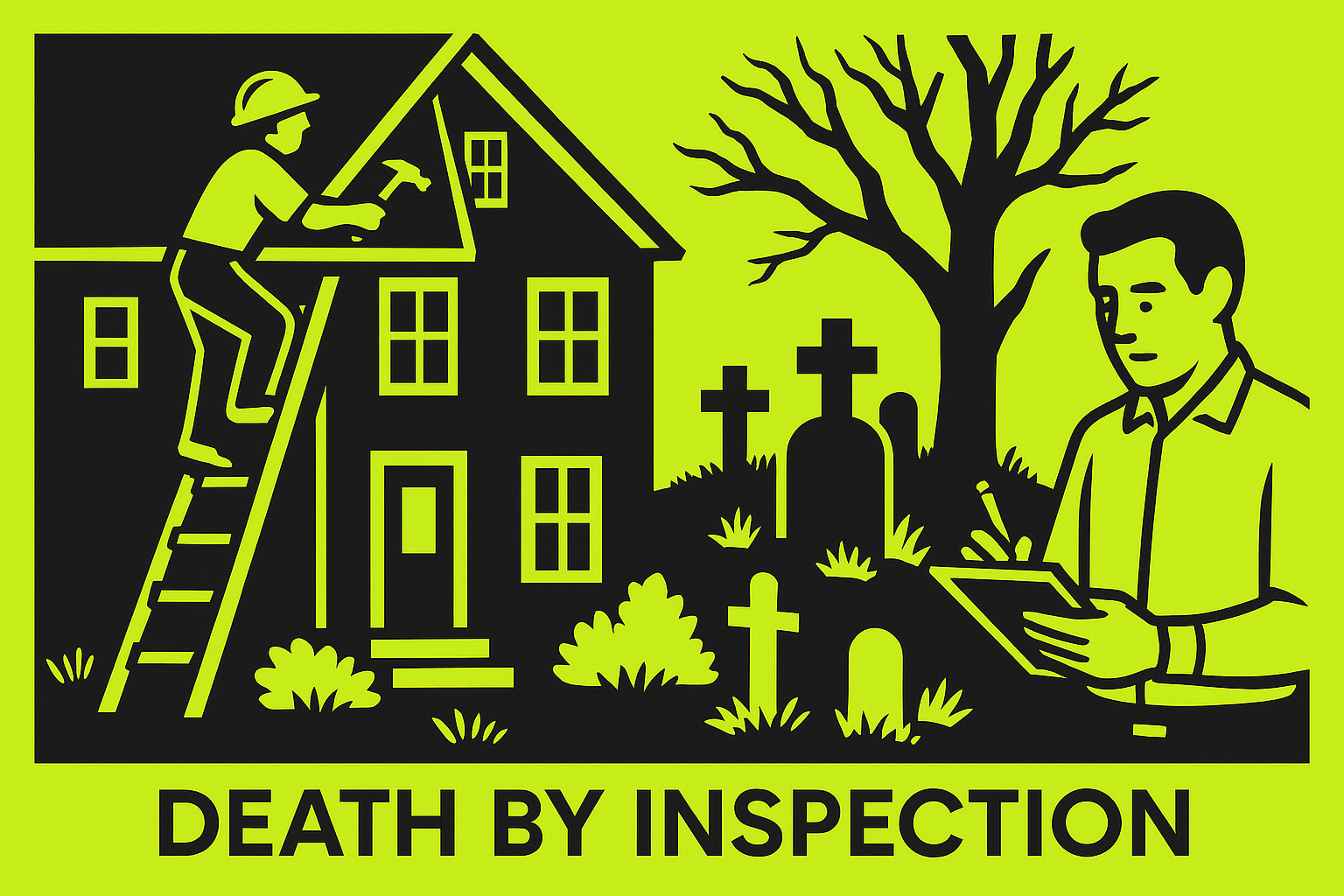
With the unit built, a tenant lined up for September 1st, 2025, and only a final inspection remaining, an inspector failed the unit because an air-conditioning condenser needed a drain line. While the contractor offered to install it on the spot—a 15-minute fix, the inspector declined. It was Friday, he explained, at 4:30 p.m. He would return the following week.
He did not return.
The city reassigned the inspection to a new inspector. The second inspector, seeing a fresh opportunity, produced a new list of deficiencies the first had never mentioned. These were duly fixed. On the next visit, more issues emerged, including a demand that Stephan spend $600 on a CCTV inspection of the sewer line, to be performed exclusively by, of course, city-approved vendors.
The sewer line functioned, according to the camera work, but the connection to the city main—located in the middle of a public street—showed a minor crack. For this, the city demanded $22,000 in repairs. Stephan proposed a reasonable compromise: allow the tenant to move in while he repaired the line within 60 days.
He was met with silence. Calls went unanswered; emails disappeared into a bureaucratic void.
... it is now foolish to build in Los Angeles.
When the city finally responded, the matter had been forwarded to Public Works. Stephan authorised the $22,000 repair. But the city refused to issue a permit for the very work it required until he gave his existing tenants 75 days’ notice of a brief water shutoff—scheduled for hours they would not be home.
Then came another twist. A separate inspector visited the property and decided that, before the sewer work could proceed, Stephan must replace 22 feet of sidewalk damaged by the roots of a city-owned tree. To trim those roots, he needed a permit from Urban Forestry, which required another 60 days of processing.
By this point, the unit was months past its occupancy date. The tenant had long since given up. The project bled time and money. And Stephan, who had considered building several more units, reached the rational conclusion: it is now foolish to build in Los Angeles.
WE WON’T GET FOOLED AGAIN
This is how cities quietly kill their own housing markets. It’s not with a guillotine, but with an endless, often redundant stack of forms, chronic non-responsiveness, and staff who treat sign-offs as an interpretive art. The problem is administrative decay.
The people who could add the most flexible and affordable homes stop participating.
Cities insist they want new housing, especially in “missing-middle” categories. They praise ADUs as a decentralised path to affordability. Their reports cite the climate benefits of infill. Yet their building departments behave as if the objective is to discourage participation from all but the most masochistic or well-capitalised players. Large developers now hire expeditors, lobbyists, and full-time compliance officers. Small-scale builders can’t do that. And so the very people who could add the most flexible, most affordable homes stop participating.
That’s the cost of permitting and inspections sandbagging.
The economic consequences are not abstract. When incremental builders exit a market, cities lose duplexes, fourplexes, garage apartments, and garden-court units—the forms that once provided a wide middle layer between luxury and subsidy. And when small construction dries up, the only housing left is either high-cost institutional work or heavily subsidised projects whose price tags routinely flirt with the absurd. Santa Monica recently reached nearly $1,000,000 per unit for homeless housing. That number is a symptom of deep dysfunction. In Durham, we could have built five to ten times that volume of housing for the same money.
CH CH CH CH CHANGES
There is, however, a path out of this morass. Inspection systems can be reformed—ideally at the state level, where parochial incentives are weaker and political incentives stronger.
States could require cities to publish clear, finite checklists for each inspection stage, and once an item is approved, it cannot be reopened by the next inspector, absent a demonstrable life-safety concern. States could impose reasonable response deadlines: two business days for communications, five to ten days for final inspections, with automatic approval if deadlines are missed. States could require proportionality: a certificate of occupancy should not be withheld for minor defects in city-owned infrastructure. And they could allow third-party private inspectors—licensed, audited, insured, and competitive—whose sign-offs cities must accept.
Inspection systems can be reformed—ideally at the state level, where parochial incentives are weaker and political incentives stronger.
Most importantly, the inspection process must be made transparent. In nearly every consumer-facing industry, performance is public. Restaurants survive on reviews. Contractors live or die by ratings. Yet inspection departments—the gatekeepers of all housing production—operate in opacity.

A Yelp-style public dashboard for inspectors and plan reviewers, with metrics on turnaround times, reversals on appeal, and basic professionalism, would probably do more to streamline housing production than a dozen consultant reports. There is now enough grumbling about the unprofessionalism of inspections online; I expect someone to launch such an app in 2026.

KEEPING THE FAITH
Cities that embrace inspections reform will see more local building, more market competition, and more incremental, lower-cost units. Most importantly, they will reestablish trust. They will foster trust in government. And they will rejuvenate faith in systems.
Cities that refuse will continue to push out the very people willing to help them. The result is predictable: less housing, higher prices, and greater political pressure to socialise production at extraordinary (and untenable) public expense.
Housing shortages are not inevitable. They are administered. And unless local governments accept that unaccountable inspection regimes can strangle supply as effectively as zoning, they will continue to watch capital, talent, and small-scale builders walk away—quietly, one simple drain line inspection at a time.