


Every year, I’m reminded of something Rick Cole once said: “We need to put the congress back in The Congress.” What he meant, during his brief tenure as Executive Director of the Congress for the New Urbanism (CNU), was simple: we need to bring 1,500 people with different values and viewpoints together and let them debate their way toward something better. We don’t have to agree on everything. The friction is the point. We just have to figure out how to do it all better.
At the CNU, I have met students desperate to learn the urbanism that their universities aren’t teaching. I’ve seen long-held beliefs about cities collapse in real time. I’ve watched exhausted city officials—fighting uphill battles at home—find the peers they need to push reforms forward. That’s not unusual at CNU. It’s the norm.
CNU is where theory meets practitioners actually doing the work. That’s rare.
This year’s Congress will be held in Northwest Arkansas from May 12–16 (register here). It’s the 34th overall, and roughly the tenth I’ve attended. Here’s why I keep going:
No one is satisfied with how our cities are being built. Whether you’re anti-development or pro-market, something is off. There is plenty of resultant noise complaining about where we are, but it’s an infinitesimally small group of practitioners who choose to do the difficult work of figuring out how to fix our land-use, affordability, and placelessness predicaments. Those people gather once per year, at the CNU.
The Congress itself grew out of a movement that began more than 40 years ago, when a group of young activists—now mostly in their 70s—pushed back against sprawl-driven development. They saw rural land disappearing and cities hollowing out. More importantly, they understood that placelessness—development without any coherent purpose—was harming humanity.
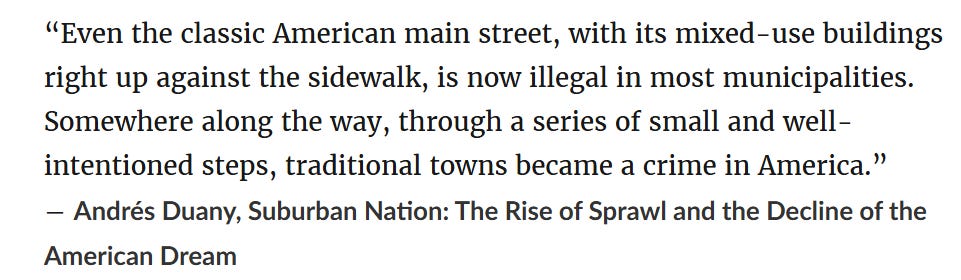
Their solutions echoed Jane Jacobs: walkable streets, short blocks, small businesses, incremental growth. Four decades later, that framework still holds. The Congress reflects it—messy, diverse, and perpetually unresolved in the best of ways. People come to CNU to argue, test ideas, find partners, and move things forward.
The event draws talented practitioners from across the globe and blends lectures, workshops, and tours. I go to several urbanism conferences each year. The best offers the opportunity to see real projects and debate their execution with the people building them. They’ll be plenty of that at this year’s CNU.
Why Northwest Arkansas
Here are the three questions I’m most interested in exploring this year.
1 Can Greenways Curate Transit & Development?
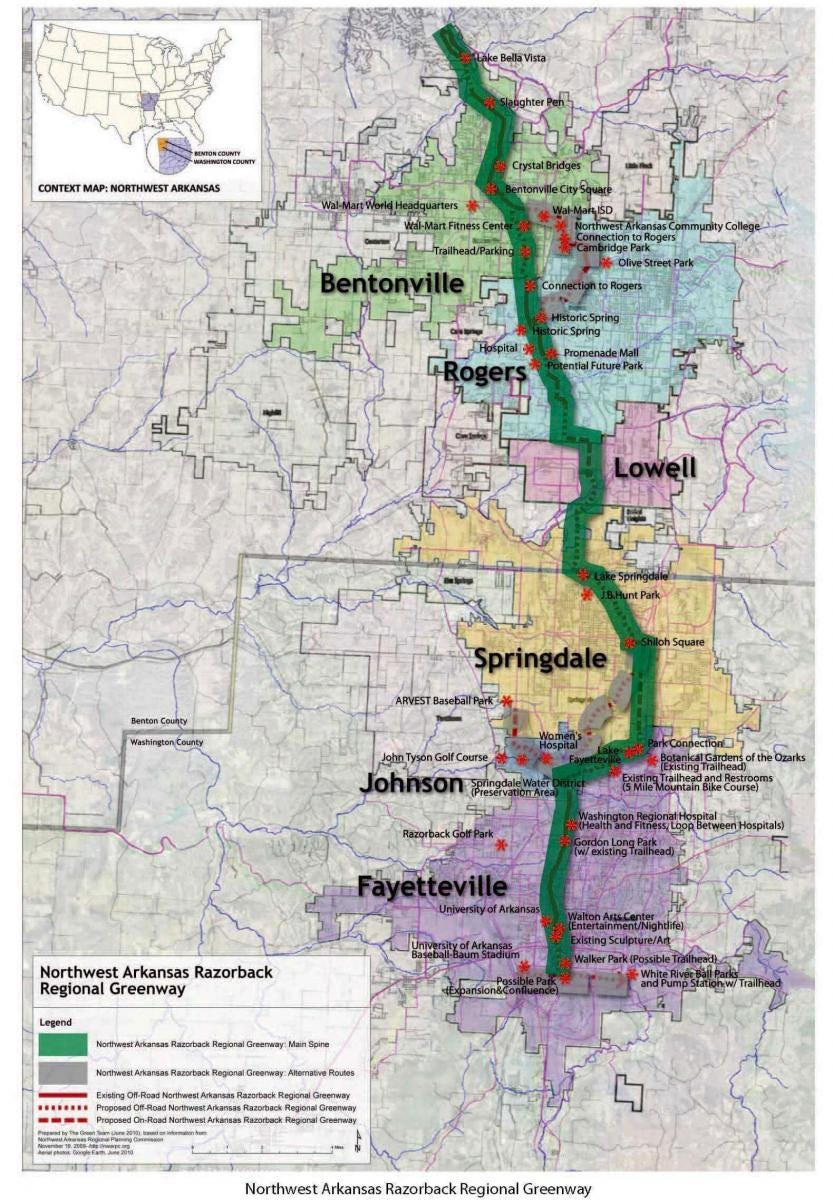
Northwest Arkansas isn’t one city, but many—a fragmented metro not unlike my home region of Raleigh-Durham. One noticeable difference is the Razorback Greenway: a 50-plus-mile trail connecting Fayetteville to Bentonville, allowing residents to move through the entire region safely by bike.
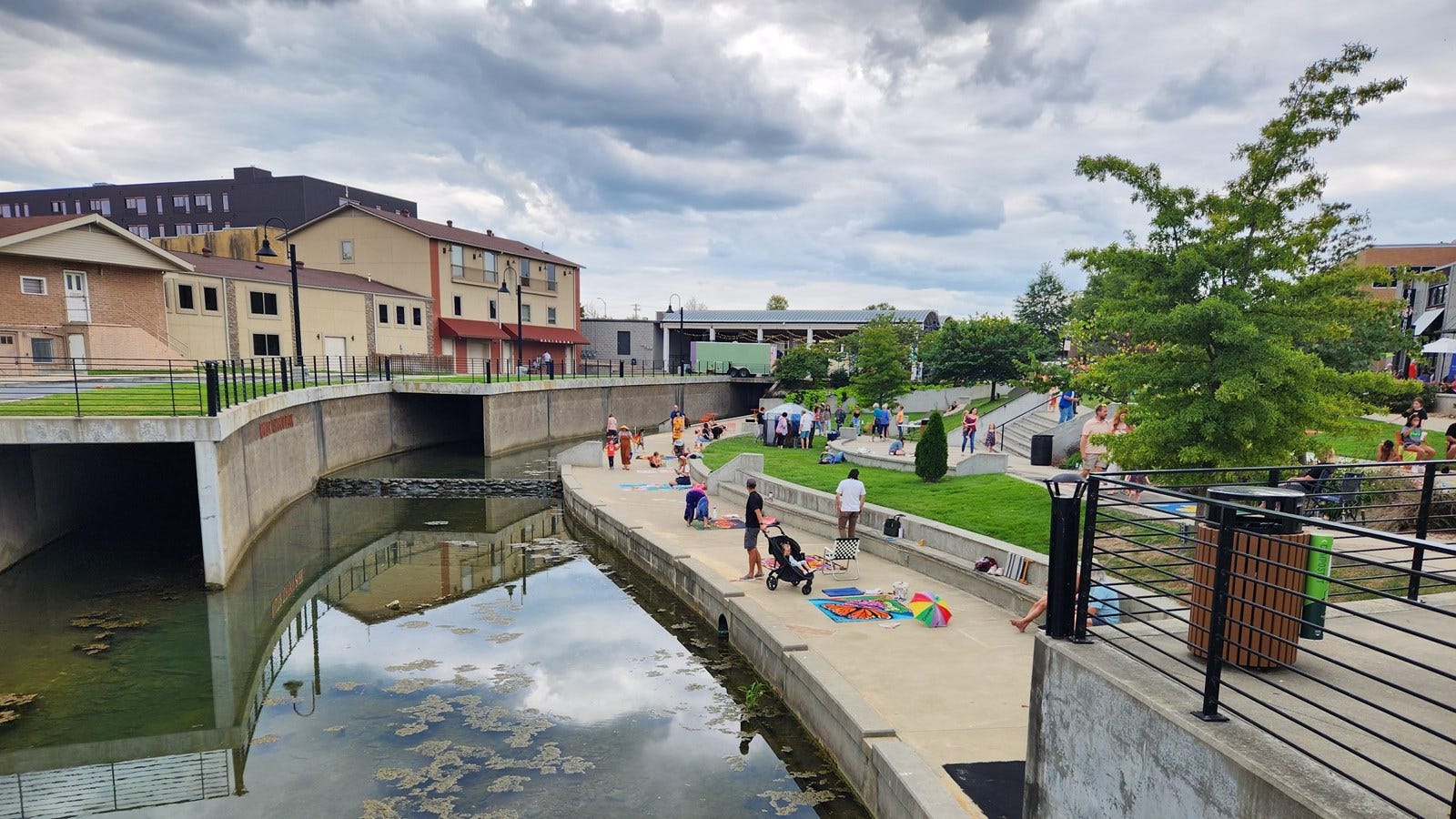
More than just a southern greenway, on the Razorback development meets the trail. Unlike many greenways in North Carolina, this infrastructure isn’t physically set apart from daily life.

We covered greenway-oriented development at Southern Urbanism last year. What stands out in Northwest Arkansas is the lifestyle the bike infrastructure enables. You don’t expect this lifestyle when you are deep into the Ozarks, but you can bike to a bar. You can bike to a game. Or work. You can live largely without a car. In small instances, it feels weirdly like Amsterdam—and it’s still evolving. There’s clearly much more of this to come.
It looks very replicable. I am going to study how they pulled it off and hope North Carolina can follow suit.
2 Can Walmart do Urbanism?
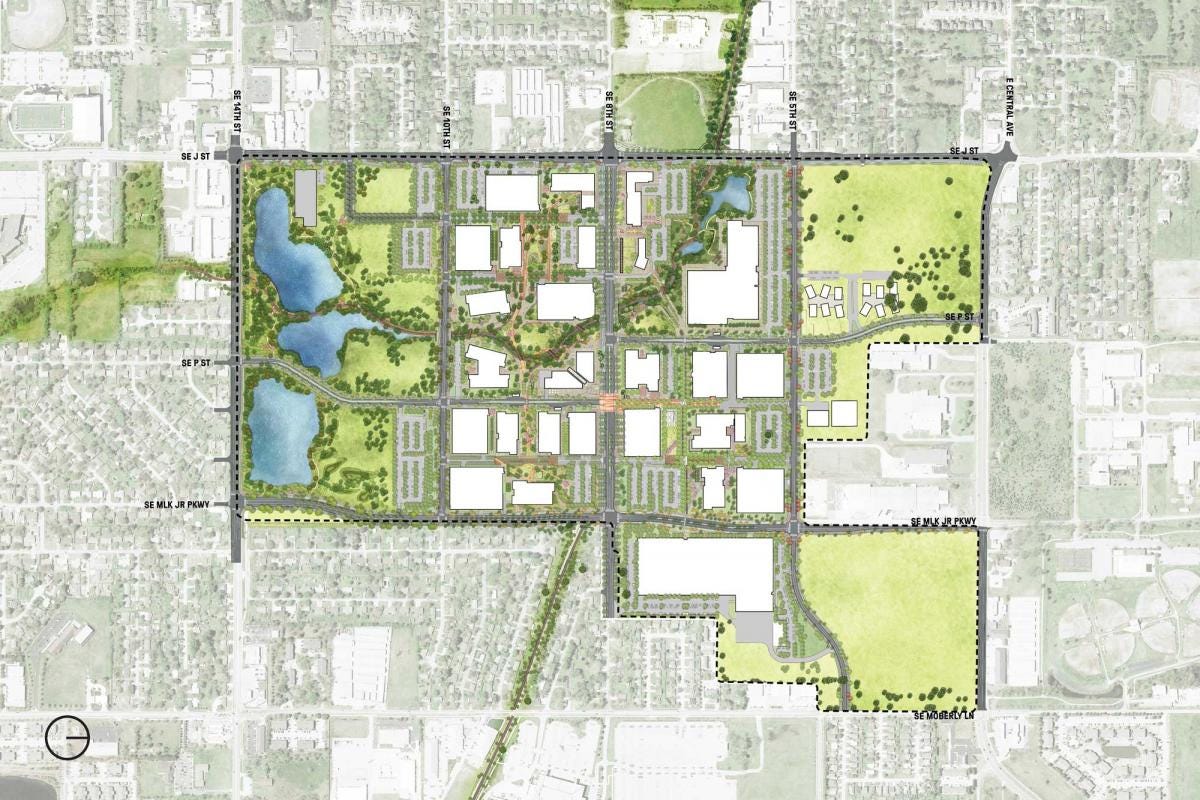
I’m also looking forward to touring Walmart’s new corporate HQ, which is unexpectedly urban.
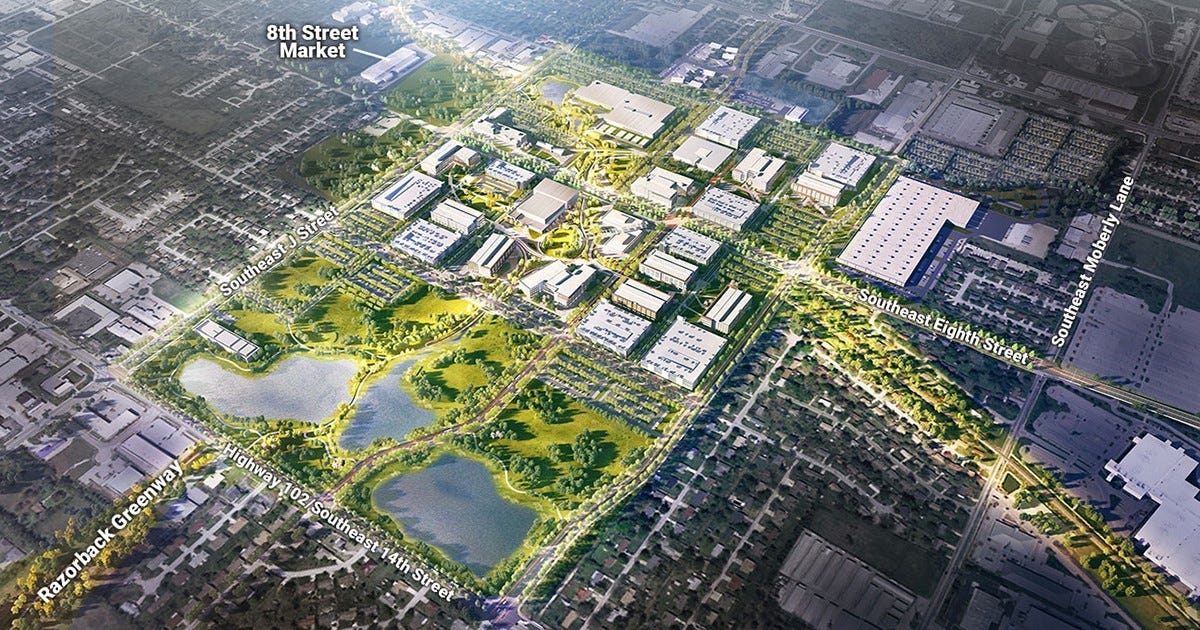
Last time I visited, it was still under construction. The symbol of Walmart building an urban HQ cannot be overstated. A company famously associated with a suburban business model seen as a threat to the place is now investing in placemaking for its employees and community.
For decades, Walmart’s headquarters mirrored its stores: utilitarian metal boxes. Now it’s building something different—not just a campus, but a mini city. They know that attracting top talent requires a better working environment. Greater Bentonville reflects that shift through a massive amount of philanthropy relative to its population of just 60,000. The Crystal Bridges Museum is probably the flagship of those investments, and it is the best museum in America you have never heard of. It is a cultural anchor largely underwritten by the Waltons.
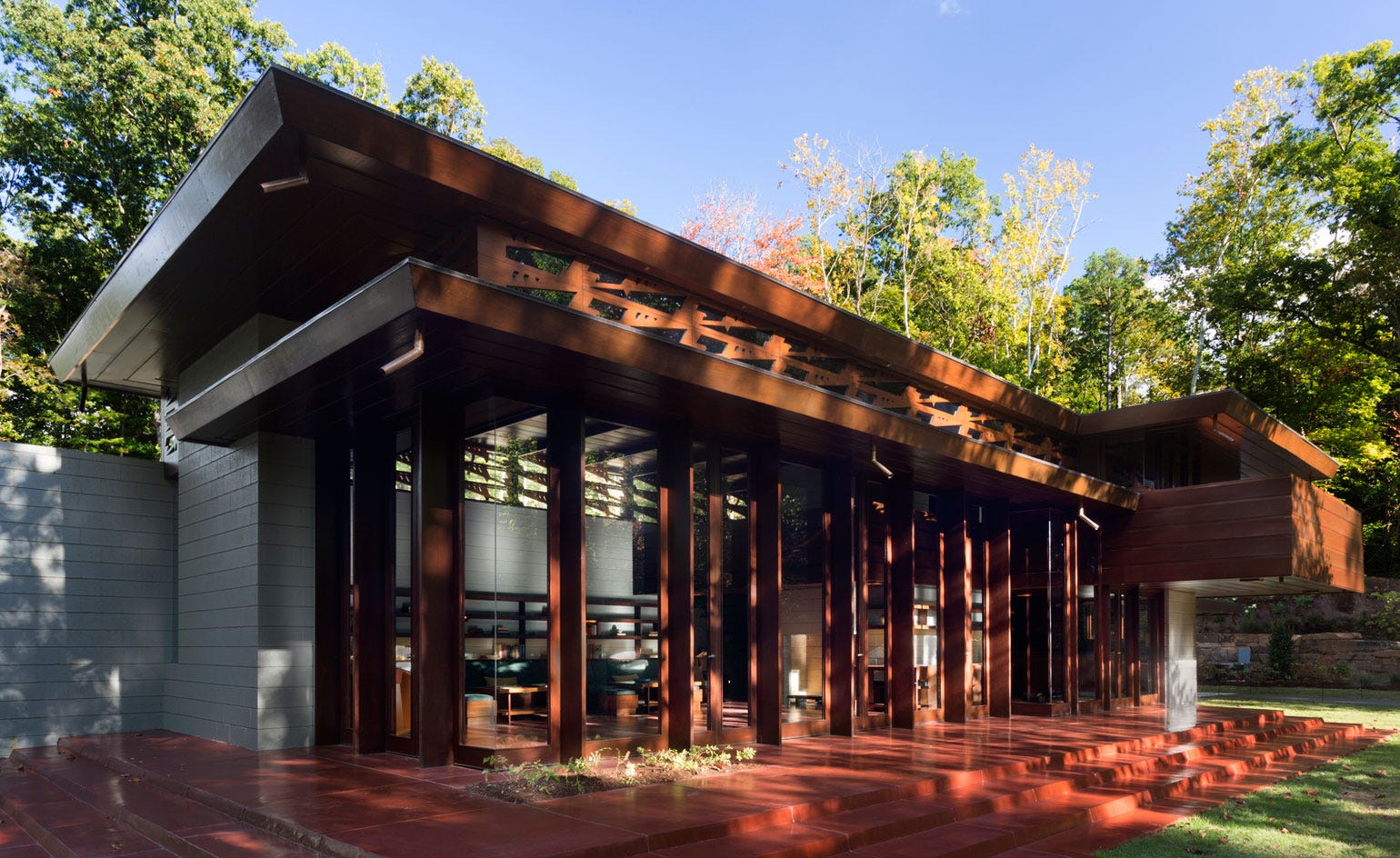
Crystal Bridges includes a reconstructed Frank Lloyd Wright Usonian home, allowing Arkansans to see, feel, and experience high design personally, and use it as inspiration for future building.
That matters. Wright’s Usonian vision didn’t fully deliver on affordability, but it evolved into the ranch house—the backbone of mid-century housing and a staple of affordability. I hope to get by the house again this visit and deepen my study of how we can build places that are both affordable and beautiful.
The great city of Bentonville is booming. Infill development is strong. More affordable missing-middle housing is appearing alongside high-end traditional design. There’s also a deep outdoor culture. Mountain biking, in particular, is everywhere. Last time there, I remembered seeing a family of five decked out in Trek mountain biking gear, rolling straight from downtown coffee shops to the exurban nature trails in less than 5 minutes. It’s part of daily life.

There is a philanthropic model in Northwest Arkansas that other small regions can follow.
The bigger question is what this means. Can our largest employers drive better human-scaled urban outcomes? Can our largest institutions underwrite the incremental development that often defines who we are? Can a company like Walmart actually help rebuild small-town America?
3 How can regions build their townbuilder ecosystems?
Northwest Arkansas may have more urban design and development talent per capita than anywhere in the country.
I’ve worked closely with architect Allison (Alli) Quinlan, developer Ward Davis, and (former) city councilman Matthew Petty across a range of projects. All have successfully developed in the region. Their work will be visible throughout the Congress.
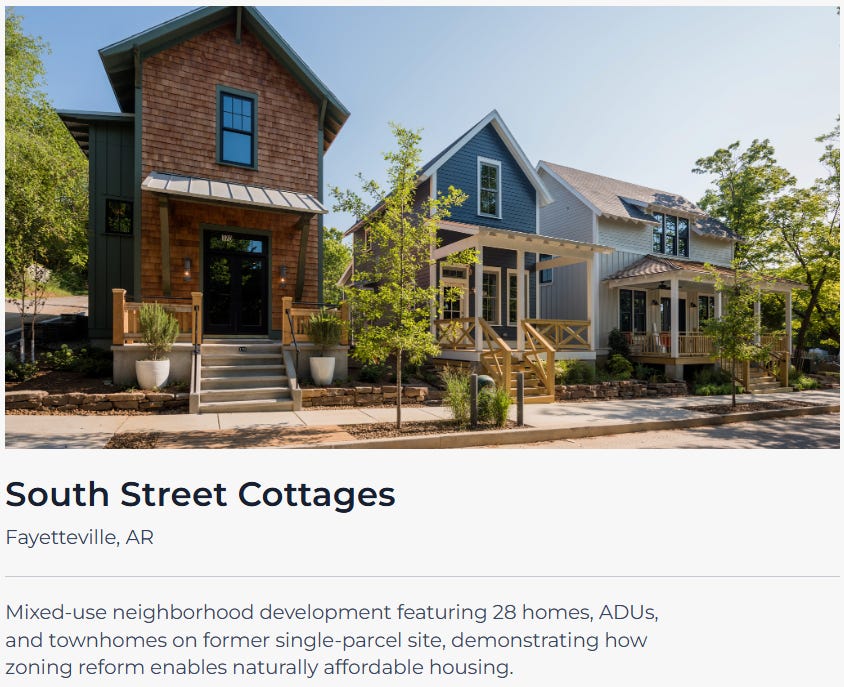
Alli Quinlan is one of the most talented urbanists under 40. As a landscape architect, she has shaped the region’s greenways and led key procedural reforms.
Ward Davis, with whom I served on the board of the National Town Builders Association, has delivered multiple new towns and significant infill work. He’s also a primary host of this year’s Congress.
When Matthew Petty was a Fayetteville city councilman, he helped implement what I think is the best tactical urbanism program in the country.
Conclusion
If you care about building better cities—and want to meet people doing the work—you should be in Northwest Arkansas this May.
Your first Congress is always mind-blowing. It shows how many others are pushing against a system that resists reform and good design at every turn. It is where these fighters congregate and share notes.
My advice? Get there. You won’t be disappointed.

Hi Aaron,
I’ve been on the fence this year. Honestly, the price of registration has really become a big disincentive. If someone wanted to comp me, I’d probably come, but as it is… idk.